Plus exclusive discount for S&L readers. Testosterone expert Dr Max Draper writes the book he wishes he read when he was in the depths of his low T malaise. But he says for most men movement, socialising and nutrition are the key to healthy hormones.
Watch the full chat with Dr Max Draper below:
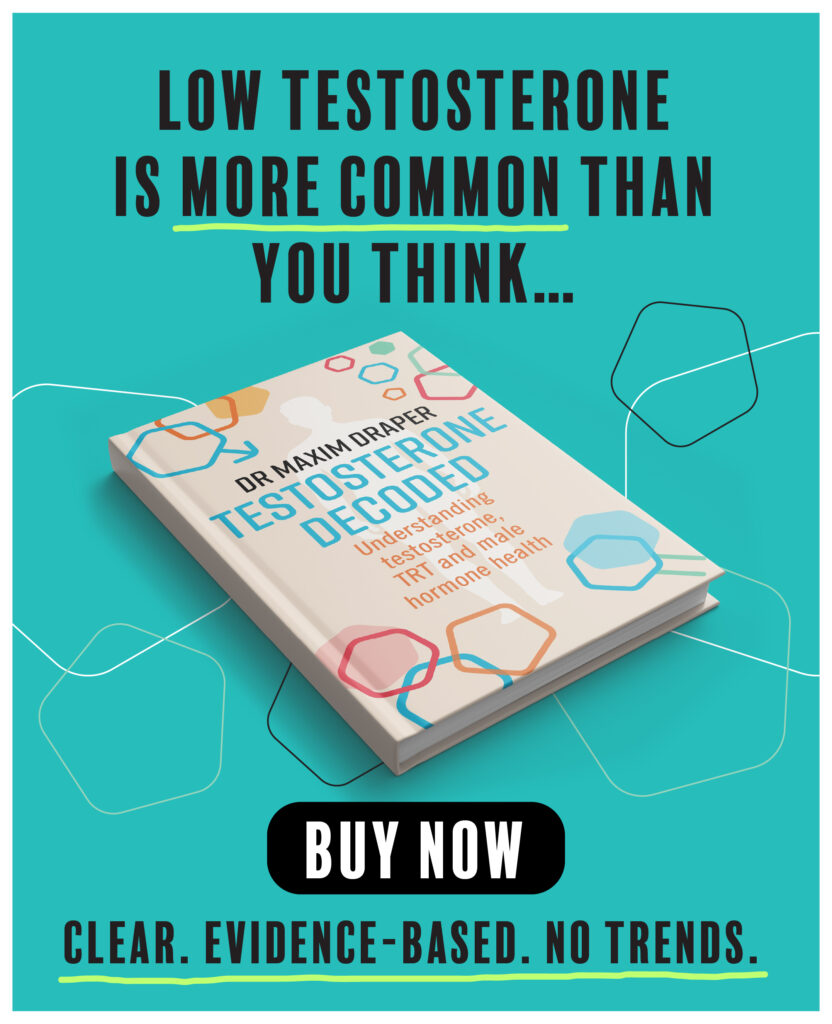
Dr Max Draper (my brother!) is a GP turned testosterone specialist. Six years ago he was in a state of mental and physical collapse in the wake of testicular cancer and meningitis. This spring he published the book he believes he needed desperately at that time: Testosterone Decoded.
A one-stop shop
The book is a one-stop shop for anyone seeking to understand what testosterone is, what it does in the male body, what levels should look like and the symptoms of low testosterone.
“The main intention was to put a book out there so that people, if they’re in a similar position I was, can understand why it might be hormonal and understand how to work out whether it’s a hormonal problem,” Max told Sport and Life.
“So it was a book that was written for me, almost back in time, six or seven years ago before I went on treatment, before I started learning about testosterone.”
The book is understandable to the layman but also valuable reading for health and fitness professionals who don’t have a nuanced understanding of testosterone.
Your GP may not recognise low testosterone
You might be surprised to learn that a GP had to educate himself about the vitalness of testosterone and the nuance of things like bound testosterone versus free testosterone.
But Max says doctors can’t be expected to know the fine detail of every health topic, although he hopes the book can help educate medical practitioners along with the general public.
“This ties in nicely with a podcast I did with a colleague who was a GP as well when he got diagnosed with low testosterone. He’s been on TRT for about 15 years now, but he said similar in terms of we were both GPs when we got diagnosed with low testosterone and we both had symptoms for a long time before we realised it was testosterone.
“We didn’t know what was going on in our own bodies, let alone with the patients we were seeing, because we just don’t get that education on testosterone.
“I think GPs could benefit, I think most practitioners could benefit from it (the book). Testosterone, hormones in general, but testosterone particularly, it seems is a real blind spot for lot of doctors.”
Dispelling the myths
Max was also keen in his book to dispel stereotypes about testosterone that see it associated with gym bunnies juicing to bulk up and wild mood swings – the so-called ‘roid rage.’
“It’s a real blind spot for a lot of doctors and I think they suffer from similar kind of associations that are in the general public. So testosterone is about bodybuilding or abuse in the world of performance enhancing drugs or it’s about aggression and anger. Doctors aren’t immune to that sort of stuff.”
Testosterone has become a central player in Max’s life. It helped him resurrect his world and wellbeing from the deepest depths when, at times, he no longer wanted to be here. Now he spends his days helping other men rebalance their testosterone levels and, in a way, rebalance their lives.
But despite his devotion to the energising hormone, he’s aware that just because testosterone levels are key to a man functioning, mentally and physically, a man who’s not functioning may not necessarily have low T.
“What’s that saying? If you’ve got a hammer everything looks like a nail. Since about seventy percent of my work is around testosterone, men’s health, assessing men for hormonal issues… that includes things like thyroid, but I could easily become overly assessed with testosterone and say ‘testosterone will fix this, testosterone will fix that.’
“It’s about not missing other issues. Testosterone issues sound like many other problems, including lifestyle issues, thyroid issues, metabolic health issues. Things like insulin resistance, diabetes. It could even sound like anaemia, primary anxiety and depression.
“You might not have a mental health issue because of a hormone problem. You might have a mental health issue, which is a primary mental health problem.’
Max has walked a rocky road and thankfully found a happy place thanks to testosterone replacement therapy. He had a testicle removed following cancer, which saw his hormones levels nosedive.
Important habits
He says there are foundational habits most men can adopt to keep their hormones at healthy levels.
“On the basic level, it’s your exercise, your movement, your nutrition. I don’t think you could ignore the sort of changes socially that could be having a knock on effect on hormones in terms of less socialising. Things like screen time, all feed into sedentary nature, don’t they?”
The big takeaway from the Max’s book is if you’re not feeling right, having your blood analysed by a hormonal specialist might be a good starting place.
The company Max Works with, Alphagenix has also offered Sport and Life readers £50 off an advanced hormone screen. Use the button below to claim your discount.
Max’s book is available from all good book stores, CLICK HERE to buy a copy from the publisher’s website.